
Running Generators in Parallel: When and How to Scale Power
March 23, 2026
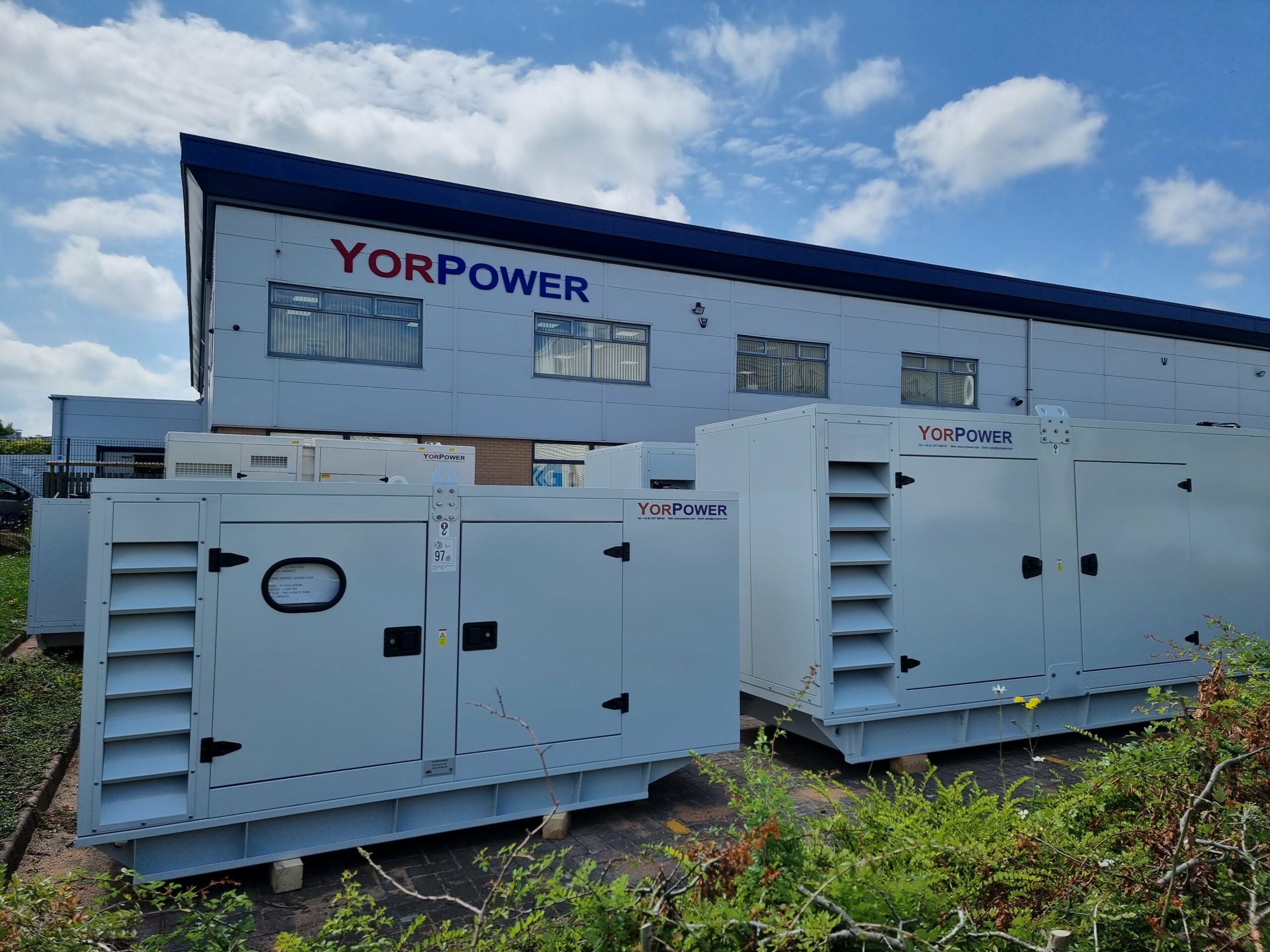
When power requirements exceed single generator capacity, or when redundancy demands multiple power sources, running generators in parallel provides a solution. Paralleling allows multiple generators to operate as a unified power source, sharing load and providing backup for each other.
This guide explains when paralleling makes sense, how it works, and what to consider when planning parallel generator installations.
Benefits of Paralleling
Running generators in parallel offers several advantages over single large units:
Scalable Capacity
Parallel installations can grow with your needs. Start with capacity matching current requirements, add generators as demand increases. This phased investment matches capital expenditure to actual growth rather than speculating on future needs.
A facility might begin with two 100kVA generators in parallel (200kVA total), then add a third when expansion requires it (300kVA total).
Built In Redundancy
Multiple generators provide inherent redundancy. If one unit fails or requires maintenance, others continue operating. The installation remains functional, albeit at reduced capacity.
N+1 redundancy means installing one more generator than required for full load. Three 100kVA generators where 200kVA capacity is needed means any single unit can be offline while full capacity remains available.
Improved Efficiency
Parallel systems can match running capacity to actual load. During light load periods, some generators can shut down while others carry the load efficiently. This avoids the light loading efficiency problems of single oversized generators.
A parallel system might run one generator at 70% load during quiet periods and bring additional units online during peak demand, maintaining optimal loading throughout.
Maintenance Flexibility
Individual generators can undergo maintenance without affecting overall system availability. Schedule maintenance during lower demand periods when remaining capacity suffices, or accept reduced redundancy temporarily during service work.
Smaller Individual Units
Multiple smaller generators may be easier to transport, install, and accommodate than single large units. Site constraints sometimes make parallel smaller units the only practical option.
Sizing Individual Units
Selecting generator sizes for parallel installations involves different considerations than single generator sizing.
Matching Sizes
Generators in parallel should typically be identical or at least closely matched in:
- kVA rating
- Voltage
- Speed (RPM)
- Engine and alternator characteristics
While different sizes can parallel with appropriate controls, matched units simplify installation, load sharing, and maintenance.
Calculating Total Requirement
Determine total capacity needed using standard sizing methods, then divide by number of units:
Example:
Total requirement: 400kVA
Desired redundancy: N+1
Number of units: 3
Individual unit size: 400 ÷ 2 = 200kVA minimum
Three 200kVA generators provide 400kVA with N+1 redundancy (any one offline, 400kVA still available).
Alternatively, four 150kVA generators provide the same 400kVA with any one offline (3 × 133kVA = 400kVA), offering even greater redundancy.
Redundancy Levels
Healthcare, data centres, and other critical facilities typically require N+1 minimum, with 2N for the most demanding applications.
Load Sharing Principles
When generators operate in parallel, they must share load proportionally. Unequal sharing overloads some units while others contribute inadequately.
How Load Sharing Works
Generators sharing load must be synchronised in:
- Voltage magnitude
- Frequency
- Phase angle
Once synchronised and connected in parallel, load sharing is achieved through:
Real power (kW) sharing: Controlled by engine fuel input. Increasing fuel to one generator increases its power output and share of total load. Governor droop characteristics naturally distribute load based on small frequency variations.
Reactive power (kVAR) sharing: Controlled by alternator excitation. Adjusting excitation changes the generator’s share of reactive load. Automatic voltage regulators with droop or cross current compensation manage reactive sharing.
Load Sharing Controls
Modern parallel installations use electronic load sharing controls that:
- Continuously monitor each generator’s output
- Adjust fuel and excitation automatically
- Maintain proportional load sharing
- Respond to changing total load
Basic systems use isochronous load sharing where all units target identical output. More sophisticated systems can prioritise units, run different capacities, or implement load following strategies.
Redundancy Considerations
Parallel installations for redundancy require careful design to achieve the intended protection level.
Single Points of Failure
Identify and eliminate single points of failure:
- Common bus: Bus duct or switchgear failure affects all generators
- Common controls: Single control system failure could disable all units
- Common fuel: Single fuel supply interruption affects all units
- Common cooling: Shared radiator systems create dependencies
True redundancy requires independent systems for each critical function or at minimum duplicated critical components.
Failure Modes
Consider how failures manifest and ensure systems respond appropriately:
- Generator failure: Automatic isolation without affecting others
- Overload: Load shedding or additional unit start up
- Synchronisation failure: Prevent paralleling out of synchronisation
- Reverse power: Detect and disconnect motoring generators
Protection systems must respond correctly to each failure mode without cascade failures.
Testing
Redundant systems require regular testing to verify redundancy actually works. Scheduled tests should include:
- Individual generator operation
- Load transfer between generators
- Simulated failure response
- Automatic start and synchronisation
Untested redundancy provides false confidence. Prove the system works before relying on it.
Common Parallel Configurations
Two Generator Parallel
Simplest parallel configuration. Provides some redundancy and flexibility.
Application: Medium commercial where full N+1 redundancy is not required but some resilience is valued.
Typical sizes: Two 100kVA or two 200kVA generators.
Three Generator N+1
Three matched generators where any two can carry full load.
Application: Critical commercial and industrial where single failure must not affect operations.
Typical sizes: Three 200kVA or three 250kVA generators.
Four Generator N+1
Four matched generators where any three can carry full load. Provides redundancy plus maintenance capacity.
Application: High availability requirements such as data centres and healthcare.
Typical sizes: Four 500kVA generators for 1.5MVA requirement with N+1.
Modular Expansion
Starting configuration with provision for adding generators later.
Application: Growing facilities where future requirements are uncertain.
Initial: Two 200kVA generators with switchgear capacity for four. Expand by adding generators as needed.
Installation Requirements
Parallel installations have specific requirements beyond single generator installations:
Paralleling Switchgear
Specialised switchgear managing synchronisation, load sharing, and protection. Features include:
- Synchronising controls for each generator
- Load sharing electronics
- Protection relays for parallel operation
- Bus connections rated for total capacity
- Individual generator breakers
Control Systems
Master control coordinating all generators:
- Start/stop sequencing
- Synchronisation management
- Load demand monitoring
- Efficiency optimisation
- Alarm and status reporting
Cabling and Distribution
Each generator requires individual cabling to the paralleling switchgear. Total current carrying capacity must accommodate full system output.
Physical Layout
Consider:
- Maintenance access to each unit
- Cooling airflow that does not recirculate between units
- Fuel distribution to multiple units
- Exhaust arrangements for multiple units
Getting Started with Parallel Systems
Parallel generator installations require specialist design and equipment. Our team can advise on configurations suited to your requirements, from simple two unit systems to complex multi generator installations.
We supply generators across the range commonly used in parallel installations:
- 100kVA and 200kVA for medium parallel systems
- 250kVA and 500kVA for larger installations
