
Why Thermal Imaging Matters For Generators
July 28, 2026
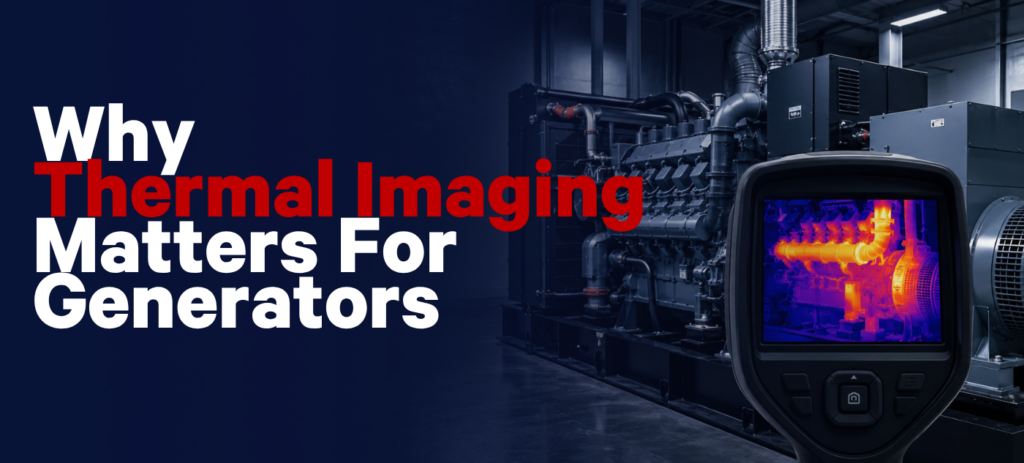
When a back-up generator is called upon, there is usually no room for hesitation. It needs to start, accept load and continue operating reliably. Yet some developing faults give little or no visible warning during a routine walk-around.
A cable termination may look secure. A breaker may continue to operate. A cooling system may appear normal from the outside. Under load, however, resistance, imbalance, wear and restricted cooling can all create an abnormal thermal pattern. A thermal camera makes that pattern visible.
That is why thermal imaging for generators is becoming an increasingly valuable part of generator maintenance: it helps engineers identify changes that the eye alone cannot see and investigate them before they affect performance.
What is thermal imaging?
Thermal imaging is a non-contact inspection technique that measures infrared energy emitted from the surface of equipment and converts it into a visible image. Warmer and cooler areas appear as different colours, allowing an engineer to compare components and spot unusual temperature differences.
The important word is unusual. A generator naturally produces heat when it runs. Thermal imaging is not about treating every warm component as a fault; it is about recognising patterns that do not match the expected operating condition or the behaviour of comparable components.
Hidden faults often leave a thermal signature
Many electrical and mechanical problems generate a change in temperature before they cause an obvious failure. Thermal imaging can therefore provide an early indication that something needs closer investigation.
For example:
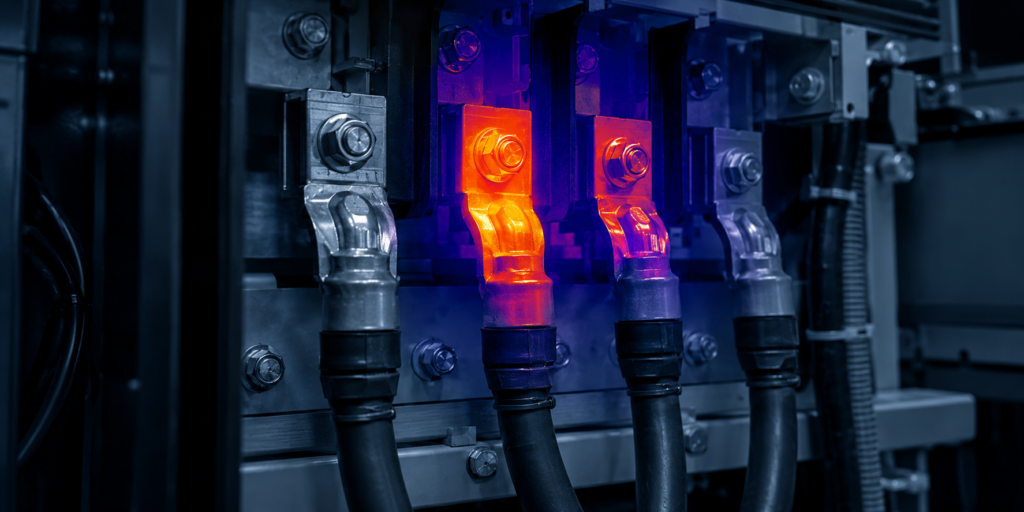
- A tight, localised hotspot at a terminal may point to a loose, corroded or high-resistance connection.
- A breaker or cable that is warm across a wider area may indicate excessive loading.
- One phase running hotter than the others may suggest phase imbalance or a problem affecting that phase.
- An unusually warm bearing area may be associated with friction, wear or lubrication issues.
- Cooler patches across a radiator or cooling circuit may indicate restricted flow, a partially blocked core or inefficient temperature management.
These patterns are clues rather than diagnoses in isolation. Load, ambient conditions, reflections and the surface being inspected can all affect a reading, so images need to be captured and interpreted by a competent professional. Used correctly, though, they can direct attention to issues that might otherwise remain hidden.
It shows what happens when the system is working
One of the greatest strengths of thermal imaging is its ability to reveal how equipment behaves under load. Some faults only become apparent when current is flowing, components are warming and the generator’s cooling system is being asked to perform.
This can add useful context during planned testing. A generator may start and produce power, but thermal imaging can help show whether its electrical connections, changeover equipment and supporting systems are sharing load and managing heat as expected.
For standby generators in particular, this matters. Long periods of inactivity can create false confidence: the set appears available, but a weakness may only reveal itself during a genuine outage or a controlled test. Observing heat patterns while the system is operating helps build a more complete picture of readiness.
Earlier insight supports better maintenance decisions
Finding a developing problem early gives maintenance teams more options. Instead of responding to an unexpected trip, damaged component or loss of back-up power, they can investigate the cause, plan remedial work and prioritise resources according to condition.
This condition-based insight can help organisations:
- reduce the likelihood of unplanned downtime;
- address overheating before it leads to more extensive damage;
- focus maintenance budgets where evidence shows action is needed;
- avoid replacing serviceable components simply because of age; and
- compare future images with earlier results to identify change over time.
The value is not just the image itself. It is the opportunity to turn a temperature anomaly into a planned maintenance decision rather than an operational surprise.
Thermal imaging looks beyond the generator set
A dependable back-up power system is a chain, and the generator is only one part of it. Changeover panels, control equipment, cable connections, breakers, distribution equipment and cooling components all influence whether power reaches the load when it is needed.
An issue in any one of these areas can undermine the resilience of the whole installation. Looking at the wider system helps identify weaknesses that might be missed if attention is limited to the engine or alternator alone.
This is particularly relevant for organisations where power continuity is critical, including healthcare, data centres, manufacturing, facilities management and public-sector environments. In these settings, the cost of failure may extend far beyond the repair itself.
A useful layer of protection, not a replacement for maintenance
Thermal imaging is most effective as part of a wider maintenance strategy. It does not replace routine servicing, electrical testing, fluid checks, load bank testing or a competent engineer’s assessment. Nor can it see through solid panels or confirm the internal condition of every component.
What it does provide is another valuable layer of evidence. When combined with service history, operating data, visual inspection and functional testing, thermal information can help maintenance teams make better-informed decisions about risk, reliability and next steps.
Thermal imaging is now available from YorPower
YorPower now offers thermal imaging as an additional service for generators and associated back-up power equipment. Whether you are planning routine generator maintenance, investigating a recurring concern or reviewing the resilience of your back-up power system, our team can help you decide where thermal imaging can add value.
Speak to YorPower about adding thermal imaging to your generator maintenance strategy.
